
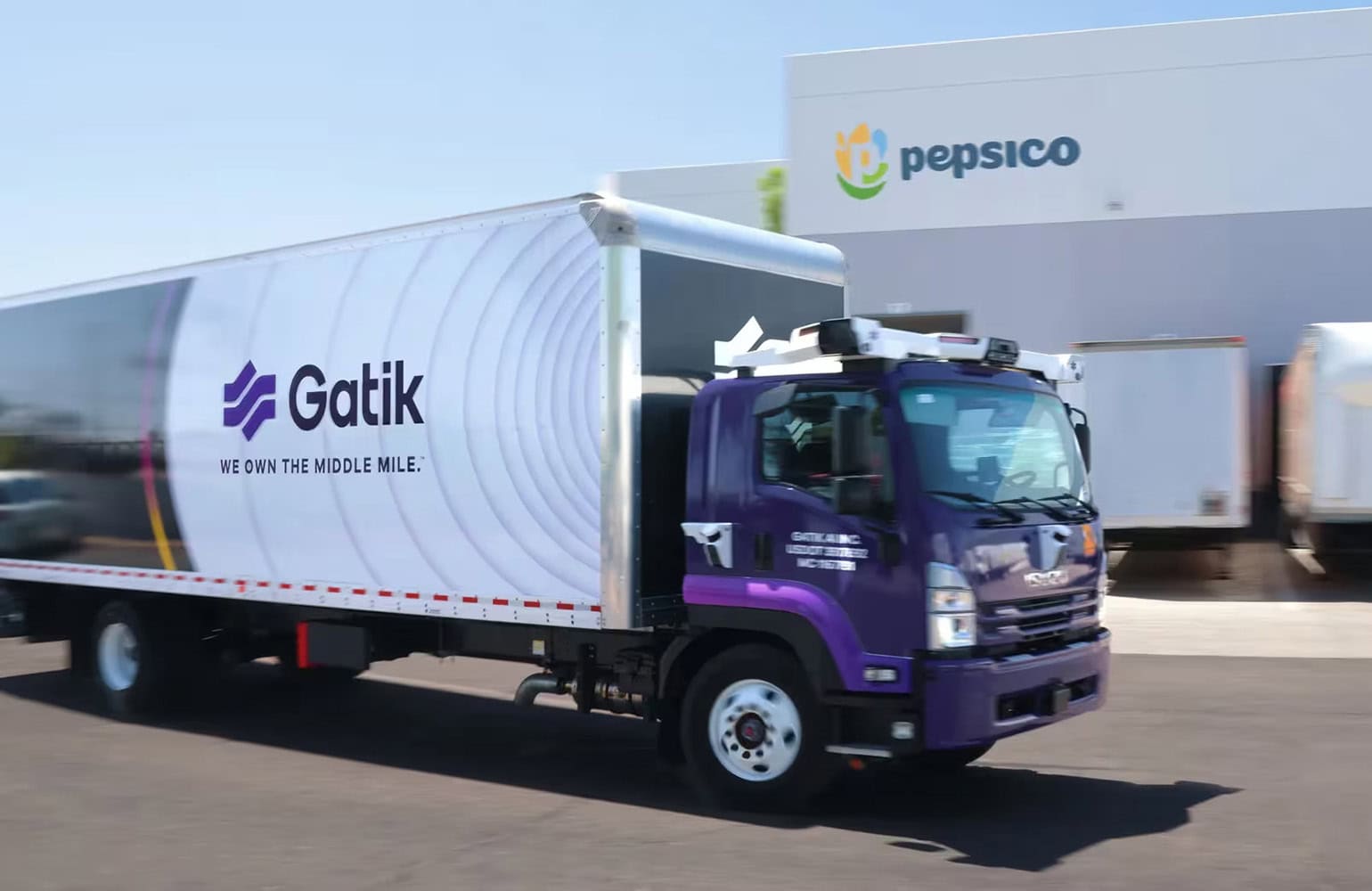
PepsiCo has 41 driverless trucks on the road. The economics are starting to make sense for other companies, too.
PepsiCo has gone all-in on driverless trucks. The food and beverage giant has been testing autonomous trucks via its partnership with Gatik since 2022, finally removing human backup drivers from the cabs on public roads last summer.
This month, PepsiCo and Gatik announced a multi-year strategic partnership to expand the operation to approximately 250 retail locations across Texas, Arizona, and Arkansas. The autonomous trucks will deliver to retailers like Walmart and Dollar General with no driver or observer in the cab. It is the largest commercial autonomous freight deployment on record.
“Serving our vast network of customers requires a supply chain that is safe, reliable, and built for the future,” said Jim Farrell, senior vice president of supply chain at PepsiCo. “Gatik is already operating inside our networks and brings the autonomous freight technology, commercial experience and scale we need to strengthen service, add capacity and move products more consistently for our customers.”
PepsiCo and Gatik have proven that the technology can work, providing a use case for other supply chain managers considering an investment in autonomous. From an economic standpoint, the available data suggests the business case may be catching up to the technology.
The Economics of Hiring Humans
In today’s labor market, the median age of a truck driver is 57. The American Trucking Associations projects the industry will need to recruit 1.2 million new drivers over the next decade to replace retiring workers and meet freight demand. That kind of effort comes with a high price tag.
In addition to an aging workforce, the trucking industry has grappled with sky high turnover rates for decades. Annual turnover at large truckload carriers continues to run above 90%.
Research from the Upper Great Plains Transportation Institute puts the average cost of replacing a driver at $8,234 per departure, with some carriers reporting costs above $20,000. That number accounts for recruiting, screening, onboarding, and idle equipment. At a 90% turnover rate, a 50-truck operation could spend more than $370,000 a year just on replacing drivers.
Driver wages remain the single largest variable expense in trucking operations, and wages have been climbing alongside labor constraints. The Bureau of Labor Statistics puts the 2024 median wage for box truck drivers at $44,140 up from $37,050 in 2020. That’s a 19% increase in four years.
According to ATRI’s 2025 Operational Costs of Trucking report, rising driver wages helped push non-fuel operating costs to the highest level ever recorded in 2024.
The FMCSA’s Final Rule on non-domiciled CDLs, which took effect in March, adds even more pressure to fleets facing high turnover and rising costs. The rule eliminates CDL eligibility for most Employment Authorization Document holders, including DACA recipients, asylum seekers, and refugees. It is facing legal challenges, but its effect on the eligible driver pool is already adding to continued uncertainty for carriers.